Whatever it takes, even if it means an LCBO Baileys' box ✌... This was me four weeks ago setting up my lap top station for a brand new world to me of online Zoom classes! And these were my exact sentiments about chartering this new virtual territory mid-summer: "With school around the corner, it's still uncertain how my Fall programs will look like. In-class, on-line demo and video-conferencing, both? I have never been keen on-video thus why I am a blogger and not a vlogger, however times a changing and we must adapt to survive and thrive. Who knows I may just love it??? Whichever the case may be, I look forward to teaching again and inspire the young and old alike to get in the kitchen to cook."
Well, in just over a month, I have been producing pre-taped food demo videos for St.Philip's Lutheran church in partnership to deliver recipe inspirations to 73 families in the west-end. For more, see my previous post. That means filming solo or with the help of my family, short clips of step-by-step recipes with or without me in them. Then collating the clips and photos, voicing over where needed, editing for flow and audio and e-packaging for client delivery. We then host a live session with the families to view the video together and have an engaging Q&A. Over to my TDSB con-ed seniors Asian cooking program, moving things online we now include adult learners, and I have a nice 11 people registered (with seven returning learners). I am proud to say I have conducted four lessons under my belt, and I can't ask for a better group- interactive, curious, inquisitive! And to answer, whether I may love it... You bet I do 💓! Yes instructing cooking classes online, learners lose the entire five senses experience and it's hard to gage whether you will try a new ingredient or flavour by watching the dish get made without tasting it, but hopefully with thorough planning on my part- prepping ingredients ahead, proper camera placement and just upping my virtual-teaching in general, the recipes will be just as inspiring to replicate from home! I am always striving to do better than yesterday, and I have to say I definitely got into my groove on-line.
Whereas I use to present the ingredients and talk through the recipes upfront while mentally visualizing the how-tos before everyone joined in hands-on to cook together, now I get to do a proper demo; walking step-by-step the recipes as I am preparing them, providing lots of information such as how to shop, substitutes and in-depth origins of condiments, ingredients and dishes. It really is wonderful teaching this way as it is thorough and it sticks. Food education and knowledge is really key for producing a dish that takes it from good... to fantastic! And my students tell me, they now have front row seats to see and hear all my tips and tricks. Gotta love it 💗!!
The bonus 💥: enjoying the dishes afterwards with my family 😋!
Showcasing my designated cooking classes' new cutting board and shiny Japanese knife by my awesome niece from Montreal. A gift from her a while back but I can't think of a better way to inaugurate it in my new home's kitchen then with the online platform for cooking 😃.
I don't have an island connected to my stove top, but these make-shift tables are perfect for giving me counter space and optimal perspective from my laptop on the kitchen table.
No fancy tripod or second camera just yet. Making do with the laptop view for my students atop a foldable stool on my stove for close up cooking. I always prep everything first at my station (two recipes for each lesson), then I move over to cook at the stove and lastly, plating at tableside, repositioning my laptop as I go. I also close my shutters so I don't get a glare when it's sunny out or even when it's gloomy. This week I actually cooked in the dark with minimal natural light, as it didn't appear well on screen. I toggle my kitchen lights and overhead stove light to make sure the food is clearly visible at all times.
I lave been using Power Point presentation slides, and I love it! I include a page in my session when introducing my students to new ingredients. I highlight the points by sharing my screen to participants on Zoom.
This was- Mission Accomplished 🔥... my first ever live online cooking class with Learn4Life.ca Toronto in my Asian Cooking Program for adults & seniors. #zoom
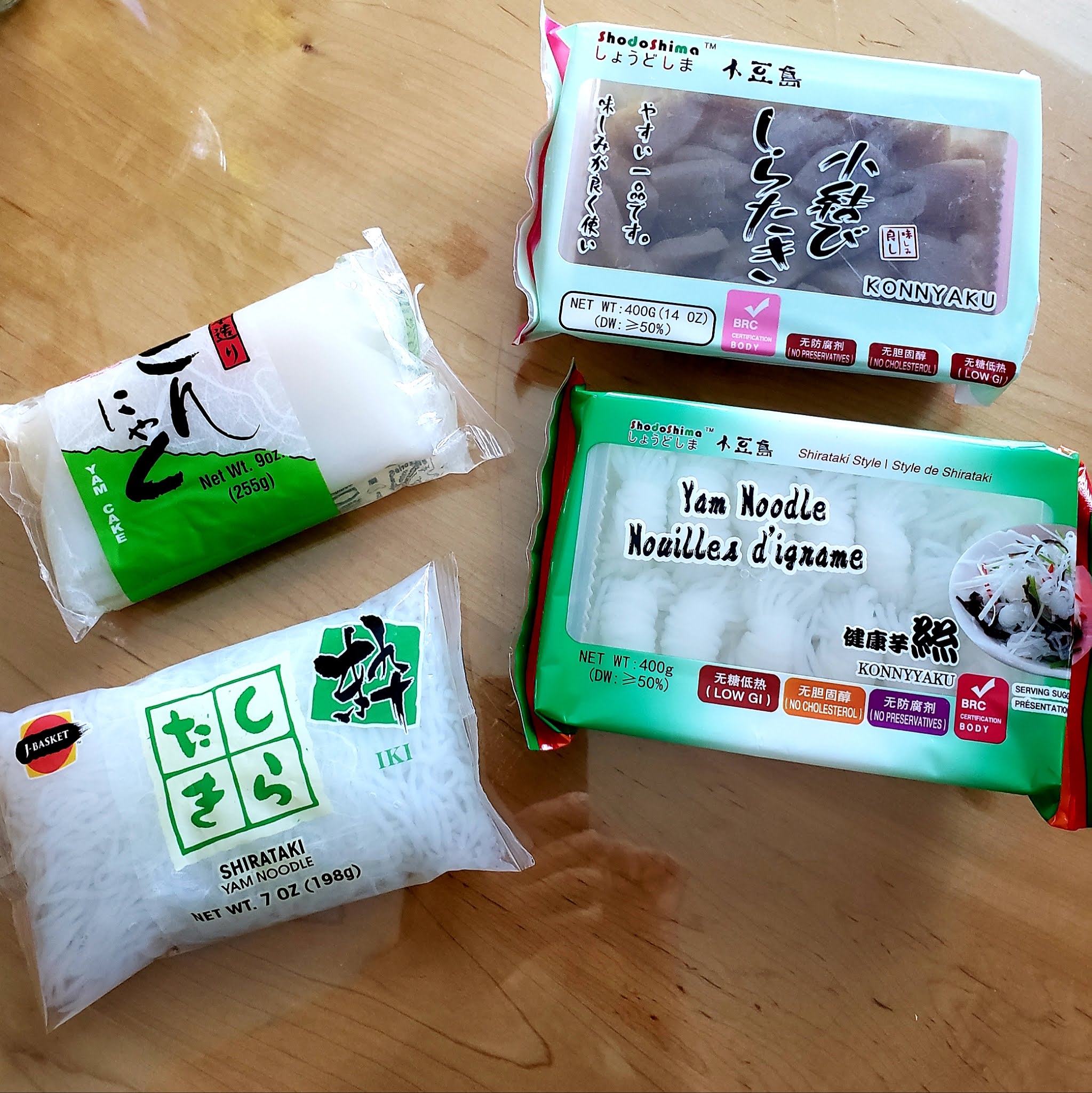
The following week, it was Japanese cuisine and we will be learning about devil's tongue- konnyaku 👹👅.
 |
| Picking up various konnyaku formats at an Asian store. |
Assembling the dishes tableside, this was the final presentation.
 |
Konnyaku Sashimi and Simmered Beef, Potatoes and Vegetables
|
The third week, we celebrated National Seafood Month with Vietnamese Clay Pot Caramel Shrimp and Cantonese Salt and Pepper Squid 🦐🐙...
Encountering Zoom issues half hour before my online class started, thankfully our TDSB Con-Ed online trainer came to my rescue sharing his screen with me to host. Yes, some delay getting started and my prep was not ready but I slayed it 💥 with these two wonderful dishes.
Shrimps cook vigorously in a mixture of bittersweet caramel sauce, fish sauce, onions and ground black pepper to create a popular "kho" simmered dish that is rich, savoury and rustic and the shrimps chewy. The squid is diamond cut to create a pineapple surface and is wonderful dredged in potato starch, shallow-fried then tossed with stir-fried onions, garlic, pepper and hot chilies. Perfect served with rice 🍚🥢.
 |
| Vietnamese Clay Pot Caramel Shrimp and Cantonese Salt and Pepper Squid |
Vietnamese cooks often prepare kho, simple dishes simmered in a bittersweet caramel-based sauce. The shrimp s cook vigorously, releasing juices that combine with the other seasonings to create a dark, tasty sauce. And you purposely overcook the shrimps to allow the flavours to penetrate thoroughly, resulting in a pleasant sweetness and chewiness.
Shrimp Simmered in Caramel Sauce (Tom Kho)
Serves 4
1-1/2 lbs. medium or large shrimps, peeled and deveined
1/2 tsp. salt for washing shrimps and 1/8 tsp. for seasoning
1-1/2 Tbsp. fish sauce
2 Tbsp. caramel sauce (* see below)
1 small onion, thinly sliced
1/2 tsp. ground black pepper
1-1/2 Tbsp. oil
1 green onion, green part only, chopped
Caramel Sauce (1 Cup): 3/4 cup hot water, divided and 1 cup granulated white sugar
In a small, stainless steel pot, cook 1/4 cup water and all the sugar, stirring just to combine, to a boil. Do Not stir when boiling. Now turn heat down to a simmer, and let cook for 10 minutes until it turns an amber colour. As the sauce begins to turn brown – at this point you need to watch it VERY closely! It will turn to a dark amber quickly; remove from heat into the kitchen sink, stand back and carefully pour in the remaining 1/2 cup hot water; stir well and let mixture thicken and cool to room temp. Store in container at room temp.
Place shrimps in a bowl with water to cover and 1/2 tsp. salt; mix rapidly with hand until frothy and water grey; rinse several times in cold water until clear; drain well.
In a clay pot/sauce pan, combine the shrimp, 1/8 tsp. salt, fish sauce, caramel sauce and bring to a hard simmer over high heat. Mix in the onion and black pepper. Cook, stirring occasionally for 10 to 15 mins. or until shrimps have turned an orange-brown.
Splash water to cook the shrimps longer; the juices eventually concentrate into a mahogany-coloured sauce, and at the end should only be a few tablespoons left.
Turn off heat, add the oil, and stir to coat the shrimps; check seasoning and add onions.
*****
Salt and Pepper Squid
Serves 4
1 lb. of squid, cartilage discarded, tentacles removed and reserved
4 cups water, with 1 Tbsp. salt added
3/4 cup potato starch
1 tsp. salt
A couple dashes of ground white pepper
Oil for shallow-frying
Vietnamese dipping sauce:
1/2 lemon, juice of
black pepper
Chinese-Style Stir-Fry:
1 Tbsp. oil
1/2 onion, chopped
2 garlic cloves, minced
1/2 green pepper, chopped
1 green onion, chopped
1 red chili, sliced (optional)
Take the squid tubes, and score into a diamond pattern. Cut into 1-1/2 inch strips.
Soak the squid in the salted water for 30 minutes. Drain the squid, and plunge into a skillet of boiling water with enough to cover for 20 seconds, then drain again and pat dry with paper towels. Toss with potato starch mixed with salt and pepper, shaking to remove any excess.
Dry the skillet and heat oil until hot. Working in batches, fry the squid for about 45 seconds or until golden crispy and cooked through, stirring gently with a slotted spoon to prevent them from sticking together. Drain on paper towels. Serve with a mixture of lemon and black pepper in a small bowl as a dip.
Or Chinese-Style:
Stir-fry ingredients, adding one at a time in a skillet with oil heated until tender-crisp. Add cooked squid and toss to coat quickly; ladle onto a serving dish and serve hot.
*****
This week we made Korean favourite bibimbap (bibim- to mix ingredients; bap- rice) and a side of mini enoki omelets.
Bibimbap (Korean Mixed Rice with Meat and Assorted Vegetables)
Serves two
100 g lean ground beef, or thinly sliced beef
1 Tbsp. soy sauce
1 Tbsp. sesame oil
1 tsp. brown sugar
1 clove garlic, minced
150 g mung bean sprouts, washed, drained, ends removed
1 medium zucchini, cut into 2-inch pieces and julienned
5 fresh / dehydrated shiitake mushrooms (hydrated six hours in water to cover), thinly sliced
1 small carrot, cut into 2-inch pieces and julienned
Oil for cooking
1/2 tsp. sea salt, divided
3 cups cooked steamed rice
2 eggs
Roasted seasoned seaweed, shredded or thinly sliced
Bibimbap sauce:
1 Tbsp. each gochujang (Korean red pepper paste), sesame oil, sugar and water
1 tsp. apple cider vinegar
1 clove garlic, minced
1 Tbsp. toasted sesame seeds
Mix the beef with the soy sauce, sesame oil, sugar and garlic; let marinate for 30 minutes.
In a skillet, lightly boil (blanch) bean sprouts, then rinse in cold water and drain. Wipe skillet, add oil and stir-fry zucchini, then shiitake mushrooms and carrot separately. Add a little salt each time.
Mix the bibimbap sauce ingredients in a bowl.
Heat oil in pan to medium high heat and stir-fry meat for three minutes until cooked through.
Fry the two eggs (sunny side up is most common).
Divide the rice into two bowls; add the meat, arrange the assorted vegetables and top each with an egg, shredded seaweed and some bibimbap sauce. Mix the ingredients well and enjoy!
 |
So hearty and scrumptious!
|
Here are some shots my students took for me during class.
Happily presenting my final bibimbap bowl!
This made it in my hungry husband's belly for lunch.
Stay tuned with more collaborations on the horizon-- all in the name of good food and community 🍲👪!