Showing posts with label Noodles. Show all posts

Friday, June 13, 2025

HK Cha Chaan Teng Satay Beef Noodle Soup

 
A popular comfort staple at HK cafes (cha chaan teng) satay beef noodle soup 🍜 is not the kind of satay you expect from Southeast Asia (peanutty and spicy) but flavoured with a sauce called sa cha (often labeled as barbecue sauce). It is made of garlic, fish, dried shrimp and mild spices concocted into a dark brown, oily and gritty smoky flavourful sauce. It is very popular in Taiwan to use as a base for hot pot. Look for Bull Head as any Taiwanese would tell you... no other brand compares 😉!


I had a deep craving for satay noodles after coming back from Hong Kong. The classic is served with vermicelli however, instant ramen is also very popular. Even though I never order this nor craved it before, the image of this fine bowl kept popping up in my head and is on the tip of my tongue. Perhaps this is the very kind of food that reminds me of my short stay in HK, and how we didn't even venture into a cha chaan teng for their many western fusion delights that makes me yearn this iconic cafe bowl. After a bit of research, I'm happy to learn how super simple it was to make and so... into the kitchen I go.

Satay beef noodle soup, truffle omelet and Chinese tea at Cafe de Hong Kong

Breakfast line up queues at this iconic Markham spot


HK Satay Beef Noodle Soup
Serves 4

Prepared broth (I combine chicken and pork bones)
1 lb. beef fillet (any quick-cooking), thinly sliced
1/2 cup sa cha sauce (choose Bull Head)
1 tsp. sugar
1/2 cup water
3 Tbsp. neutral oil, divided
1 garlic clove, minced
1 shallot, minced
1 454 g pkg. vermicelli or 4 pkg. of instant ramen (reserve the seasoning packets)
2 green onions, thinly sliced
Toasted sesame seeds 

Marinade:
1 Tbsp. soy sauce
1 tsp. sugar
2 tsp. cornstarch 
1 Tbsp. neutral oil
2 Tbsp. water

Combine the marinade ingredients into a bowl and add the beef; mix well to evenly coat. Set aside for 30 minutes.


In a small bowl, combine sa cha sauce, sugar and water.


In a medium skillet/pan over medium-high heat, saute the beef in 1 Tbsp. oil, spreading around to cook evenly for a minute. Remove into a bowl. Add the remaining oil, and saute the garlic and shallot for a minute, then add the sacha sauce, allowing it to simmer for one minute, before adding back the beef and cooking until done about two minutes to absorb all the flavour.


Meanwhile, cook the vermicelli according to package instructions. Drain well.


Bring the prepared broth to a boil. (Note: for a vegetable side, try adding bak choy or choy sum to round out your meal).


Divide the noodles into four bowls, top with satay beef mixture, veggies (optional), ladle soup to cover and garnish with green onions and toasted sesame seeds. Serve with hot chili oil at the table.


Full Recipe: 

HK Satay Beef Noodle Soup
Serves 4

Prepared broth (I combine chicken and pork bones)
1 lb. beef fillet (any quick-cooking), thinly sliced
1/2 cup sa cha sauce (choose Bull Head)
1 tsp. sugar
1/2 cup water
3 Tbsp. neutral oil, divided
1 garlic clove, minced
1 shallot, minced
1 454 g package vermicelli
2 green onions, thinly sliced
Toasted sesame seeds 

Marinade:
1 Tbsp. soy sauce
1 tsp. sugar
2 tsp. cornstarch 
1 Tbsp. neutral oil
2 Tbsp. water

Combine the marinade ingredients into a bowl and add the beef; mix well to evenly coat. Set aside for 30 minutes.

In a small bowl, combine sa cha sauce, sugar and water.

In a medium skillet/pan over medium-high heat, saute the beef in 1 Tbsp. oil, spreading around to cook evenly for a minute. Remove into a bowl. Add the remaining oil, and saute the garlic and shallot for a minute then add the sacha sauce, allowing it to simmer for one minute, before adding back the beef and cooking until done about two minutes to absorb all the flavour.

Meanwhile, cook the vermicelli according to package instructions. Drain well.

Bring the prepared broth to a boil.

Divide the noodles into four bowls, top with satay beef mixture, ladle soup to cover and garnish with green onions and toasted sesame seeds. Serve with hot chili oil at the table.

And just a fun gallery at another favourite HK Cafe in Scarborough known for their gorgeous retro interior replicate of any cha chaan tengs. It's like I went back to HK without actually leaving 🇭🇰🚫✈😁- Cafe de Majestik! I was mesmerized and so happy to discover them! Check it out for their extensive cafe offerings and set combo meals for a group!


Sunday, March 3, 2024

Happy Korean Pork Belly Day With Jjajangmyeon...


Cookin' Korean Jjajangmyeon 🇰🇷🍜 to celebrate 03.03 National Pork Belly Day in Korea and after being inspired and drooling watching new Netflix food series Jjajangmyeon Rhapsody. It traces the flavourful evolution from its Chinese origins to being South Korea's most beloved comfort foods with chef, restauranteur and food researcher Paik (Baek Jong-Won).

Fun Food Fact: Koreans celebrate this day with pork belly dishes because the first part of its Korean word for pork belly is "sam" in Samgyeopsal, which means three (sam; 삼), and the rest of its word, layered (gyeop; 겹) and flesh (sal;살). Paying homage to this special cut of pork on the third day of the third month is brilliant! Popular in Chinese and Korean butcher shops resembling bacon, samgyeopsal has three visible layers: the outer skin, then a two-inch layer of thick fat and attached to that two to three inches of lean meat. You can get them with or without skin-on.


As you might have seen on Korean dramas 🇰🇷📽, it’s also the most popular dish for home delivery especially on a move day 💨. A more recent phenomena, jajangmyeon has become a symbolic dish that single people eat with their friends on Black Day (April 14) to commiserate with each other over black noodles for lacking a romantic relationship. The sauce is made with chunjang (춘장), which is a Korean-style black bean paste made with fermented wheat flour, soybeans and caramel sauce. Chunjang must first be fried in oil to become a jjajang sauce to remove the bitter and sour taste of the bean paste.


A humble and affordable dish, tonight, I added cabbage, potatoes and zucchinis on hand cooked with chopped pork belly and shoulder. But the allure of the dish is the aromatic onions- lots of it cooked in water thickened with cornstarch slurry! Served with chewy fresh wheat noodles, a side of prepared fried chicken (a perfect pair) and my home pickled radishes, it was an acceptable slurpeable messy mouth mess 😋 . Or make it another popular version- black bean sauce over rice called jjajangbap 🖤🍚🥄 Next time I will try it with bacon for that smokey flavour to enhance the earthy rich jjajang further 👍!

Leftovers for lunch the next day


Check out the step-by-step recipe:

Korean Jjajangmyeon (Black Bean Sauce Noodles)
Serves 6 (adapted from Koreanbapsang.com)

6 servings of fresh Korean wheat noodles (refrigerated)

For the Sauce:
7 tablespoons Chunjang (춘장), Korean black bean paste some may be labelled as jjajang (짜장)
3 tablespoons cooking oil
1.5 tablespoons sugar
1.5 tablespoons oyster sauce - optional
1.5 cups chicken stock or water. You can add 1/2 cup more for thinner, more liquidy/watery sauce 
1.5 tablespoons cornstarch dissolved in 1/4 cup of chicken stock or water

Meat:
1/2 lb. pork belly and 1/2 lb. pork shoulder (preferably with some visible fat, pork butt, etc.)
1 teaspoon grated ginger
1 tablespoon rice wine (or mirin)
⅛ teaspoon each salt and pepper
2 tablespoons cooking oil
1 tablespoon soy sauce

Vegetables:
2 large onions, diced
2 medium potatoes, small diced
3 cups chopped green cabbage
1 medium zucchini, diced
1 small cucumber, shredded (topping)
Green onion, slivered (topping)
 

Have a pot of water ready to cook the noodles. Turn the heat on when you start cooking the meat. This way you will have the boiling water ready, for cooking the noodles, by the time the sauce is done.

Cut the pork into 1/2 - 3/4 inch cubes. Marinate the pork with rice wine (or mirin), ginger, salt and pepper while preparing the vegetables in same dice size.


In order to get chunjang into a jjajang which means fried sauce, you must first fry it. Add the black bean paste to a small saucepan with the oil, sugar, and the optional oyster sauce. Fry it over medium heat for 2 - 3 minutes, stirring constantly. Set aside in a bowl.


Heat a large pan with 2 tablespoons of cooking oil over medium high heat. Add the pork and stir fry until no longer pink, adding a tablespoon of soy sauce half way through. Add the onion and potatoes; cook until soft, stirring occasionally. Add the cabbage and zucchini and continue to stir fry until vegetables are softened.


Stir in the black bean paste and mix everything together until all the meat and vegetables are coated well with the paste.
 

Pour in the stock (or water) and bring it to a boil. Cook for 3 to 4 minutes. Stir in the cornstarch slurry and cook briefly until the sauce is thickened. Add more sugar if desired to taste.


Add the noodles in the boiling water. Cook according to the package instructions and drain. Do not overcook. The noodles should have a firm bite to them (al dente). If the noodles are very starchy you may want to rinse slightly and drain well.


Place a serving size of noodles in each bowl. If you want the noodles hot, microwave it first. I find that in restaurants, the noodles is often served warm with the black bean sauce warm to hot. Spoon the sauce over the noodles and garnish with the optional cucumber matchsticks, green onion slivers and a sprinkle of toasted sesame seeds. Alternatively, you can serve sauce over cooked rice- jjajangbap 🍚🥄.


Stir well to coat, pull up and slurp. Keep napkins nearby :)


Chef Paik's affordable and casual specialty restaurant has opened in North York @paiksnoodle_canada serving flavoursome jjamppong (spicy seafood noodle soup) and jajangmyeon alongside delicious crunchy tangsuyuk- deep fried pork with assorted vegetables in a tangy sweet sauce. Check it out 🤤💥!


Wednesday, May 31, 2023

Celebrating Asian Heritage Everywhere All At Once In May...

 
What a honour it was to speak at Dentsu Canada last week about my Chinese Food and Culture to celebrate Asian Heritage Month 🇨🇳. Denstu is one of the largest media and marketing agencies in the world headquartered in Tokyo, Japan with offices across the globe since the 1960s. This was hosted in their Toronto office with their Calgary, Vancouver and Montreal offices livestreaming in to watch 🇨🇦📽.


I was invited by their Business Resource Group to raise awareness around different immigrant cultures to bring people together through food as part of their second event in this series, with South Asia being the first. The presentation was followed by a Chinese luncheon also in their respective Canadian offices. The menu was extensive and varied including many classic dishes that are beloved catered by the one and only Hong Shing Restaurant on Dundas West. 


I started my presentation on the distinct cuisine flavour characteristics of the various regions in China, then proceeded to talk about my favourite comfort food (wonton soup), special traditional food (zong zi sticky rice ode to my grandma #myfoodhero), what a typical Chinese meal looks like in the day, table etiquette, a soy sauce difference educational piece followed by information on my cookbooks, Chinese food documentary recommendations and recipes to share.

How to Prepare Dumplings

Soy Sauce Differences

As a wrap up, I shared a beautiful quote from the film, A Bite of China-- "A mother instinctly implants flavour into her child's memory. For the child, the flavours becomes kind of like a mother tongue. The memory of the familiar flavours becomes a compass forever pointing to home." 🏮


Catering by Hong Shing Restaurant

Dentsu's organization team was excellent to work with, very approachable and professional. I felt very welcomed and the sense of a great inclusive culture at Dentsu. As one of their staff walked me out to the elevators, I said this was warm hospitality at it's best- thank you all 🙏!


What does Korean chap chae, Filipino adobo chicken, sushi wraps and bubble tea all have in common? Answer: they are all food students @tdsb_communityservices prepared this May to celebrate #asianheritagemonth🏮

Filipino Adobo Chicken

Japanese Sushi Wraps

Prepared Bubble Tea for Assembly


On a different high note, it's this exuberance I feel when I see young people try a new cuisine for the first time. Korean chap chae and egg dumplings (with noodles) prepared by two male youths new to my newcomer culinary program at JOhn Poilanyi Collegiate- one from Mexico and the other Dominican Republic. Paired with kimchi (another new food), we had a great time eating and chatting with bacchata 🎵🎶 being played in the background. And in the adobo chicken and mango salad session, a new Russian student prepared and tried Filipino food for his first time, and took leftovers home for his parents to sample! 

Talk about cross cultures, cross generations, cross connecting. Gotta ❤ it!! 🤗


And ending the Asian celebrations on an even higher note with my dear friend @lisa.eats and her family here for a BBQ and swim 🍗🥩🥗💦. Yes, it's finally that time again and what an absolutely beaute of a day 🔆🌸!

My darling hubs the King of the Grill for the day


Grilled Korean Gochujang Chicken Wings (adapted by Cakenknife.com)
Serves 6

4 lbs chicken wings, broken down into drummettes and flats with tips
1/3 cup Korean red chili pepper paste (Gochujang)
1/4 cup brown sugar
1/4 cup soy sauce
2 tablespoons water
1 tablespoon sesame oil
1 tablespoon rice wine vinegar
4 cloves garlic, minced
1 1/2 tablespoons fresh ginger, peeled and minced
1 teaspoon kosher salt
1 teaspoon black pepper
Garnish: sesame seed, sliced green onion

Add raw chicken wings to a large ziploc bag.

In a small bowl, whisk together chili pepper paste, brown sugar, soy sauce, water, sesame oil, rice wine vinegar, garlic, ginger, salt, and pepper until combined. Add the marinade to the wings and seal the bag. Let sit in the refrigerator for at least 1 hour or overnight.

When ready to cook, preheat grill to 400°F and remove wings from bag, reserving the marinade. Add wings to the grill and cook until the skin is crispy and they are cooked through, flipping them every 10 to 15 minutes as they cook. This will take about 30 to 40 minutes. 

Brush the finished wings with the sauce. Garnish with sesame seeds and green onion. Serve immediately.

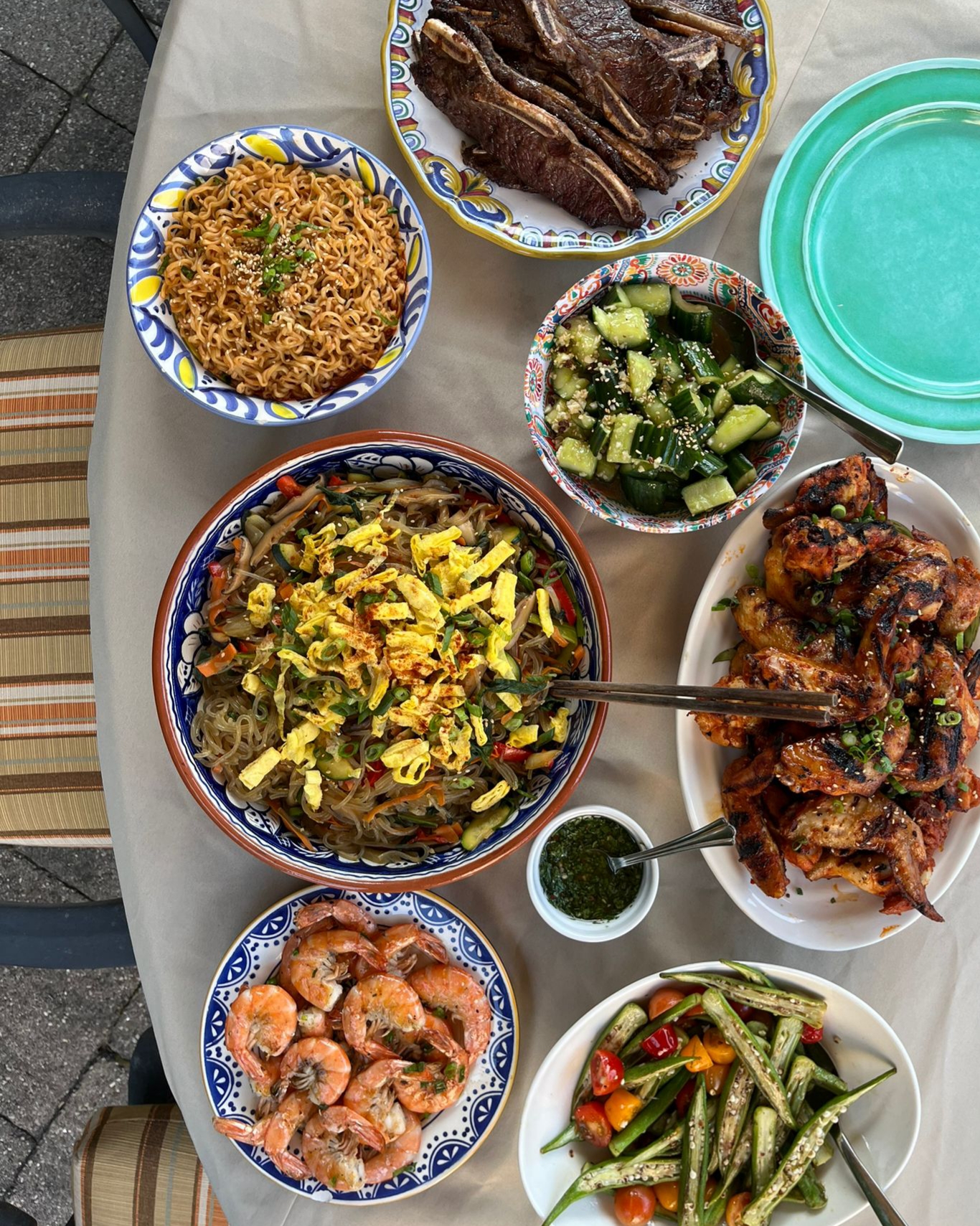
On The Menu: Buldak stir-fried noodles, Grilled kalbi ribs,
Szechuan Spicy Cucumber Salad, Gochujang chicken wings,
Okra and Tomato Salad, Grilled shrimps with cilantro lime sauce and Chap chae.

On the Dessert Side: Easy Creme Caramel with Fresh Fruits
and Coconut Tapioca with Taro, Grass Jelly and Jackfruit


And on the friendship side, Lisa and I, my baby with her baby.... So Blessed 🙏! 


How did you celebrate Asian Heritage Month?