Wednesday, February 18, 2015

Chinese New Year: Steamed Whole Fish with Ginger and Green Onions...


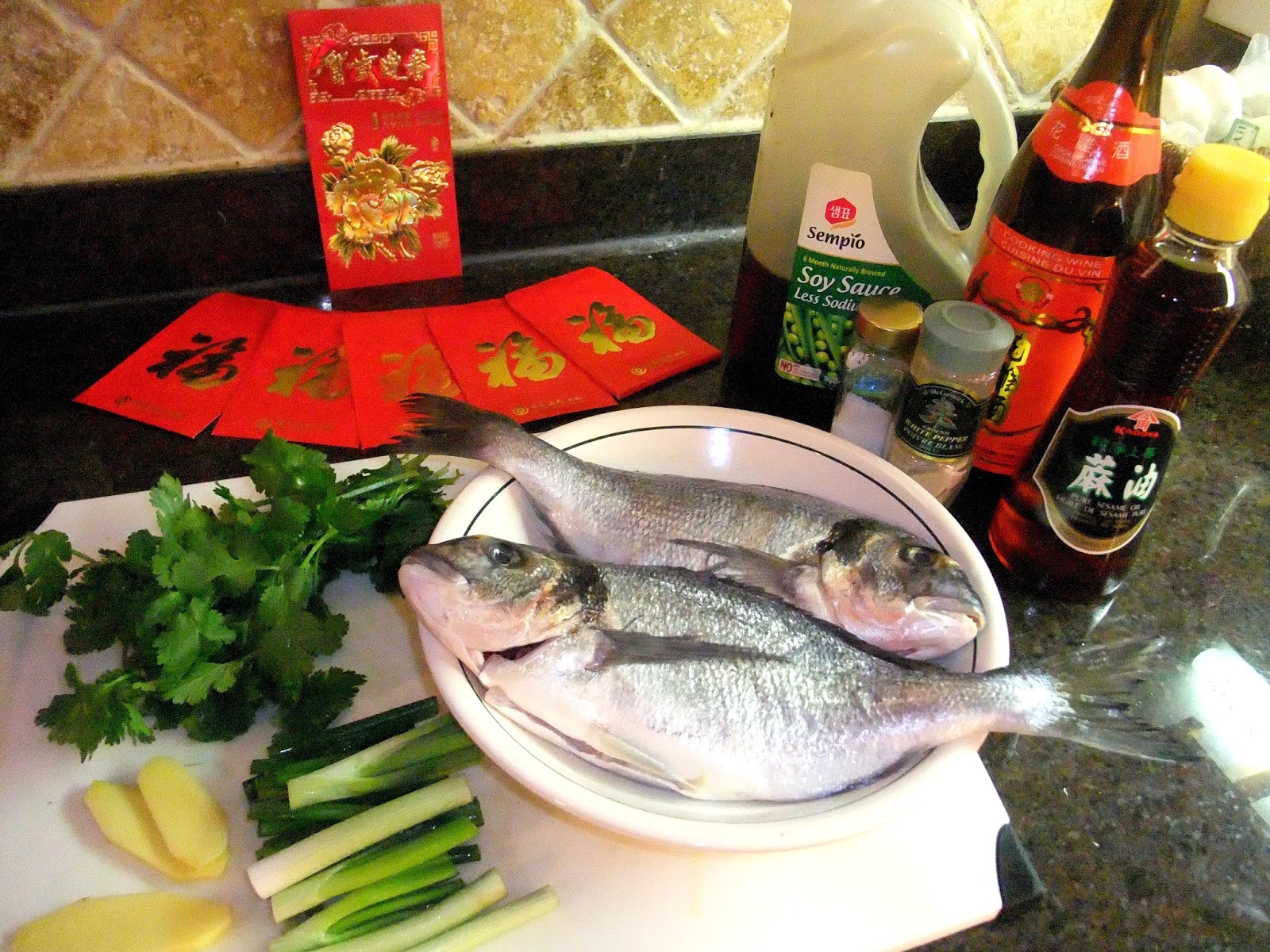
It's New Year's Eve and tonight many families are having their "toon neen fan"- reunion dinner with family and relatives. Mine with my parents and the extended family will be on Saturday, so tonight we just had a small feast to celebrate the end of the old year. What better dish to make than steamed whole fish, a must main course in a Chinese banquet, especially on new Year's Eve because the Chinese word for fish "yu" is pronounced the same as the word "to spare"- meaning that there's always something on the table to spare! Steaming preserves the freshness and natural flavours of the fish, and with the classic addition of ginger and green onions, it's also healthy and delicious. Tonight, two fish for double the happiness and fortune...

Elaborate Chinese New Year displays in supermarkets.

To check for freshness, look into the gills and poke the eyes. If the gills are red and slimy, and the eyes 
are bulging and look firm, the fish is fresh. Ask your fish monger to scale and gut the fish for you. 

Steamed Whole Fish with Ginger and Green Onions
Makes 4 servings

1 large fish, or two smaller fish (carp, sea bass, sea bream), scaled and gutted, rinsed and blotted dry
1 tsp. salt

dashes of white pepper powder
2 tsp. sesame oil
3 slices of ginger, peeled and cut into thin strips
3 green onions, cut into 2-inches, then cut vertically into silken strips

1/4 cup seasoned soy sauce for seafood (*see note below)
2 Tbsp. canola oil
Sprigs of cilantro, stems removed and chopped (optional)

*NOTE: If you can't find seasoned soy sauce for seafood make your own mixture with 2 Tbsp. soy sauce, 1 Tbsp. cooking wine, and 1 tsp. brown sugar dissolved in 1 Tbsp. warm water.

If you wonder why the soy sauce tastes particular harmonious and delicious on whole fish served in Chinese restaurants it's because they use a brew that is made for especially for seafood- savoury but slightly sweeter to bring out the natural sweetness in its meat. Once I figured this out, I can't go back to any ol' soy sauce on fish. Look for seasoned soy sauce for seafood in the soy sauce/condiment section in Asian supermarkets-- the only brand I ever buy is Pearl River Bridge.

Add seasoned soy sauce along with hot oil after the fish are cooked. 


Rinse the gutted fish and pat dry well. Score both sides of the fish to the bone with diagonal cuts. Rub the inside and outside with salt and sesame oil. Sprinkle both sides with white pepper.

Always score whole fish on both sides to ensure that the flavours of all the ingredients gets through.

Place fish on top of green onions in heatproof plate and place ginger on top. Steam, covered inside a wok or skillet on a rack and steam on high for 15-18 minutes. The fish is done when a knife inserted into the thickest part of fish easily parts from the bone.


Remove the plate from the steamer and pour out the fish water and remove the ginger. If not using steaming plate to serve, transfer fish to serving platter. Pour seasoned soy sauce evenly over the fish. Heat oil until hot in wok or skillet and meanwhile, dress fish with onions all over. Pour hot oil over the whole length of the fish to cook the onions. Serve with cilantro on top.

Updated tips for great-tasting results:

- lay two pair of chopsticks on bottom of pan before placing the fish (this creates a steam on the bottom and prevents the fish skin sticking;
- if working with fresh caught-fish (butcher's usually remove this), make sure you remove the inner jagged jaw cartilage which is used for filtering food-- this cooks bitterness into the meat;
-  trim all the fins, and cut the tail off for easier eating;
- looking into the inside of the gutted fish, cut the membrane on both sides of the spine where two dark lines run down, to remove the blood; rinse for optimum meat flavour;
- score the fish on a slight angle at several intervals on both sides of the fish to cook thoroughly and maximize flavour;
- do not open the lid while steaming-- reference-- 1-1/2 lbs. whole fish needs about 15 minutes to cook thoroughly on high steam.

Beautiful fish duo ready to be devoured!
Tangerines are symbols of wealth , with their bright happy, vibrant colour suggesting good fortune. 
Perfect for a sweet ending to a New Year's Eve dinner.

The rest of the meal consisted of roasted BBQ pork and roasted duck picked up from a Chinese BBQ deli, Marbled Tea Eggs, homemade Carrot and Radish Pickles, stir-fried celery and Chinese greens with oyster sauce. 


Gung Hay Fat Choy!  "Best wishes for a happy and prosperous new year!" 


Tuesday, February 17, 2015

Chinese New Year 2015 : Chinese Marbled Tea Eggs and Other Auspicious Eats...


Chinese New Year festival is a major holiday in China and is celebrated widely across Asia, and this year it's on Feb 19th- enter the year of the Ram! In Chinese culture, there is a full schedule of food rituals that can begin a week before New year's day and lasts 16 days, with activities symbolizing renewal both for the living and for the ancestral spirits. The New Year's Eve banquet is called Reunion Dinner, and is the most important meal of the year with families of several generations sitting around tables and enjoying the food, which is a collection of symbols and omens as well.

Goat dishes will be very popular and symbolic of good things to come. A very auspicious goat dish- San Yang Kai Tai- 'three goats bring wealth' is a very lucky dish for this Chinese New Year- a goat and radish stew, made with goat, cabbage, radish, green onion and ginger. San Yang Kai Tai used to be a New Year saying to wish good luck. The Chinese for "goat" (羊) is in a Chinese character for good luck (祥 xiáng /sshyang/). The character 泰 (tài /tigh/) means 'peace' and 'grand'.  


There is a long list of good luck foods eaten during this time. Eggs, for one are often featured prominently in many Chinese festivals as an offering to the Gods. The egg's round smooth shape symbolizes good luck and happiness and also fertility. According to Chinese myth, when the world began the universe was egg-shaped, the yolk represented the earth and the white the heavens. Then Pan-ku, separated them bearing the yin yang symbol- the bright and clear element- yang became heaven and the dark and murky yin formed the earth. 


Chinese tea eggs are a favourite with my kids, and the attractive marbling with their aromatic savoury flavour of anise, tea and soy are super comforting, not mentioning delicious. As you plan for your celebrations, try making these pretty eggs and some of my other auspicious foods to complement your simple or elaborate feast to bring in the new year.

Chinese Marbled Tea Eggs

12 eggs, room temperature

3 cups water
1/2 tsp. brown sugar
3 Tbsp. soy sauce
1 Tbsp. dark soy sauce
1/2 tsp. salt
3 Tbsp. black tea leaves (I used pu-erh dark red tea)
3 star anise

1/2 tsp. five spice powder
1 (2-inch) piece cinnamon stick


In a large saucepan, hard-boil the eggs by simmering in slightly salted water to cover for 20 minutes. Remove from heat, drain, and cool. When cool, tap eggs with the back of a spoon to finely crack shells all over (do not remove shells).


In a large saucepan, combine remaining ingredients. Bring to a boil, add eggs, then reduce heat, cover, and simmer for one hour. Allow the eggs to cool in the liquid (the longer the seep, the more flavourful). Shell the eggs to reveal their beautiful marbled pattern and serve.


TIP: If you don’t have Chinese tea leaves, you can use black tea or regular tea bags. Eggs can steep up to 1-1/2 days for richer flavour. Store eggs unpeeled and tightly sealed in refrigerator for up to four days. 


Other auspicious foods popularly eaten on the Eve or New Year include:

Classic Spring Rolls


Spring rolls get their name because they are traditionally eaten during the Spring Festival. The lucky saying is: 'A ton of gold' (because fried spring rolls look like gold bars) — a wish for prosperity.

My recipe uses pork, cabbage, carrots, bamboo shoots and shiitake but is versatile to make completely vegetarian.


Pan-fried Dumplings


Jiao Zi are commonly eaten for breakfast on New Year's Day. Chinese dumplings can be made to look like Chinese silver ingots (which are boat-shaped, oval, and turned up at the two ends) that are steamed, boiled or pan-fried. Legend has it that the more dumplings you eat during the New Year feasts, the more money you can make that year. Dumplings should be made with many pleats to signify sealing in the good fortune.


Sticky rice- whether sweet or savoury is also a favoured food which symbolizes family sticking together. The pronunciation and round shape of popular tangyuan (sweet sticky rice dumplings) are associated with reunion and being together. Here are some of my savoury sticky rice recipes:

Sticky Chinese Rice

Kate's Pearly Meat Balls

Tomorrow I will be steaming whole fish which symbolizes abundance and a perfect dish particular on New Year's Eve for the start of the new year.


Monday, February 16, 2015

George Brown College's The Chefs' House Restaurant Certificate Giveaway Winner is....


The Chefs' House Restaurant $100 Certificate Giveaway Winner is.... T.G! 

Congratulations!

Thank you to all who participated. To read the original post for the giveaway, click here.

Located in the heart of downtown Toronto, The Chefs' House is an innovative, student-focused concept restaurant where George Brown Chef School and School of Hospitality and Tourism Management students have the opportunity to learn from the best teacher -- experience. It also gives the public the opportunity to experience a relaxed urban dining experience.

The Chef's House


Coming up, it's all about Chinese New Year next week! The year of the Ram enters February 19th, and I'll be posting on some symbolic foods customarily cooked and eaten in feasts on this major occasion, along with photos and insights on how this special time is celebrated around Asia. Stay tuned... 


Friday, February 13, 2015

Street Food Series: Thai-Laos Sticky Black Rice with Coconut Milk and Grilled Mangoes...


Food stalls are an essential part of Thai life where most Thais eat at these open-air, one-dish specialist stalls at least once a day. And when it comes to sweets, they are just as much loved on the streets, but more so as a midday snack rather than part of a meal. Whereas desserts are eaten after dinner in the West, sweets in Southeast Asia are typically eaten as afternoon snacks from rice cakes, banana fritters to dessert soups. Sticky rice with coconut milk is hands-down the most popular Thai dessert, and also in Laos, which is favoured by westerners compared to their other more sweet offerings. Sweet juicy mangos served with firm sticky rice and slightly salted coconut milk or cream is an interesting contrasting combo. When ripe mangoes are not in season, the kanom (sweets) vendor offers other toppings for the rice including a sweet-salty one that uses dried shrimp. To the ordinary eye, black sticky rice pudding may not look appealing but yet once sampled it can have you hooked and vying for more. Subtly nutty, rich in texture and with the salty sweet taste of warm coconut sauce, it is an ultimate comfort food. And very simple to recreate at home. 

Sticky Black Rice with Coconut Milk and Grilled Mangoes
Makes 4 servings (double recipe to serve a small crowd)

1-1/2 cups long-grain glutinous black rice, soaked overnight in water and drained
1 cup canned or fresh coconut milk
1/3 cup palm sugar, or substitute brown sugar Note: Palm sugar has a distinctive caramel flavour perfect for this dessert. Available in pod-like cakes, but also sold in paste form at Asian markets.

1/2 tsp. salt
2 ripe mangoes, or substitute sliced ripe papayas, peeled and sliced or cubed


Set the steamer basket over several inches of boiling water in a pot. Keep the rice from touching the boiling water. Cover and steam for 30 to 45 minutes, or until the rice is shiny and tender. Be careful that your pot doesn't run dry during steaming; add more water if necessary.
Cooking time can vary depending on rice brand used.

Meanwhile, place the coconut milk in a heavy pot and heat over medium heat until hot. Do not boil. Add the sugar and salt; stir to dissolve completely.

Preheat grill to high. Oil the grill rack with a paper towel dipped in oil with tongs. Grill the mangos until slightly charred and softened, tossing once or twice. Set aside.


When the sticky rice is tender, turn it out into a bowl and pour 1/2 cup of the hot coconut milk over; reserve the rest. Stir to mix the milk into the rice, then let stand for 30 minutes to allow the flavours to blend.


Serve individually in bowls or serve up in a vessel to pass around. Arrange mangoes and set out a small bowl with the remaining sweetened coconut milk, stirred thoroughly, with a spoon, so guests can spoon on extra as they wish.


It's Valentine's Day tomorrow, so here's a heart-shaped sticky rice dessert giving a nod to the special day Southeast Asian-style!


Cook's NOTES: 
You can substitute black Thai sticky rice with half white regular rice. Soak the two rices together; the white rice will turn a beautiful purple as it takes on colour from the black rice. Cooking will take 10 minutes longer.

Leftover TIP: Coconut Milk Sticky Rice has enough moisture and oils in it that it keeps well for 24 hours, in a covered container in the refrigerator, without drying out. Rewarm it the next day by steaming or in a microwave.


This ends on a sweet note, my week-long series on South Asian street foods. Check out my other delicious edibles from Singapore's Hainanese Chicken Rice, Vietnamese Banh Mi Sandwiches and Malaysian Oyster Omelet Oh Chien. Drop a comment or two about your favourite SE Asian street foods... would love to hear from you!


Thursday, February 12, 2015

Street Food Series: Malaysia's Oyster Omelet (Oh Chien)...


I am delighted to feature Malaysia's top street-hawker food- intoxicating, crispy, gooey, chewy savoury and juicy oyster omelets!! It happens to be one of my sons' favourite dish especially Étienne- he can't get enough of the goo! Texture is very important in Malaysian cooking, and this one takes the cake on sticky and slippery, along with well representing the four flavour pillars of sweet, sour, salty and spicy and even bordering into bitter when you get a bite into over-crisped oyster gills. There are different versions all over Asia from Thailand, Singapore and Taiwan (where it originated), and Malaysia's variation cooks up more eggy and soft. It is quite simple to attempt at home. If you love oysters and eggs, and the complex elements as described, you may find this can easily become a household favourite!

Photo Credit: http://live-less-ordinary.com/southeast-asia-food

Cooking up Malay oyster omelets in a famous Oh Chien stall in the northern end of Muar's Glutton Street.
Photo Credit: http://johorkaki.blogspot.ca/

Malaysia's Oyster Omelet (Oh Chien)
Makes 4 servings

Batter:

1/4 cup potato starch 
2 Tbsp. tapioca flour 
1 cup water
1 tsp. fish sauce
a few drops of sesame oil

4 eggs, beaten
salt and 
ground white pepper

2 Tbsp. cooking oil
8 large fresh oysters, or frozen and thawed (*cleaned), cut into two pieces or use over a dozen small oysters
2-3 cloves garlic, chopped
1 tsp. fish sauce
2 tsp. Chinese cooking wine
1 tsp. rice vinegar
drizzle of sesame oil
cilantro leaves, chopped
1 Tbsp. chilli sauce such as Sriracha
lime juice or rice vinegar to taste

*Let oysters sit in 1/2 Tbsp. cornstarch and 1 tsp. salt for 10 minutes to clean. Rinse twice and drain well. 

In a bowl, mix the starch and flour with water to make a very thin batter. Add fish sauce and sesame oil. 
In another bowl, beat the eggs, add a little salt and pepper and set aside.


In a skillet or wok, heat 1 Tbsp. oil until smoking hot. Pour in half the batter, spread it around thinly and let it bubble up gooey and slightly set.

Pour half the eggs over and spread it around to cover the batter below; when it is almost set, break the mixture with your spatula to create gaps. Then add the remaining batter; let cook for a minute. Again, break apart the omelet with your spatula and when its slightly set, add the remaining eggs.
NOTE: Layering the batter and eggs will create a saturated gooey eggy texture with every bite and crispier edges.


Push the egg and batter mixture to the sides of the wok. Add the remaining oil and stir in the garlic until fragrant.  


Add the oysters. Cook for a few minutes, season with fish sauce, cooking wine and vinegar. 


Toss it together with the egg mixture until heated through.


Remove onto serving vessel. Drizzle on sesame oil and top with cilantro. Serve dipped with chili sauce mixed with lime or vinegar.

Dee-liciously pungent, savoury with complex flavours and textures having a party in our mouths!


Join me again tomorrow, for a sweet finish to my series on Southeast Asia's street eats with Coconut Milk Sticky Black Rice and Grilled Mangoes- a Thai-Laos hawker favourite...


Tuesday, February 10, 2015

Street Food Series: Vietnam's Banh Mi Sandwiches and More...


Southeast Asia is a snacker's paradise, and the one country that holds dear to my heart when it comes to food and family is Vietnam. My husband's from Sóc Trăng, a province in the Mekong Delta in Southern Vietnam. We were lucky to go visit his family in 2004, and during the trip we were exposed to a frenzy of exotic foods. Other than the amazing and elaborate meals we had at the family table with all his extended relatives, the best eating experiences were had by hitting the streets. Before sunrise, produce markets swell with people. Women were seen stoking kitchen fires and filling flat baskets with tin steamers and arranging soup or fresh spring roll ingredients; these baskets were then hung on both ends of bamboo poles and hoisted upon their shoulders as they hustle their goods to the flood of passerbys. Others set up shop with a simple table, cooking ingredients and equipment surround, serving their offerings to hungry customers who would crowd around make-shift plastic tables to eat. 

A vendor selling pho taken outside my hotel window in Ho Chi Minh City.

Taking in the pleasures of the midday sun.

Beautiful and fragrant display of fresh exotic Asian fruit at one of many fruit stands.

Enjoying popular tri-coloured bean (Chè ba màu) dessert in a night stall with new friends Cang and Mai!

Colonial rule has left its mark on Vietnamese cuisine with mini French baguettes sold widely on street corners- modified by bakeries in the region to a light, white baguette-roll with a crispy crust, and filled into sub sandwiches as a hearty lunch or snack. And we all know how delicious, cheap and cheerful these Vietnamese (banh mi) sandwiches are with its contrasting colours, taste and textures. Fillings range from Vietnamese pâté to ham, cooked sausages and grilled meats, alone or in combination, and includes cucumbers, pickled daikon and carrot shreds, fresh herbs and chilies. Instead of prepared meats, and for a different spin on the ubiquitous pâté and ham filling, I am making a homemade version with thin pork chops, adding fish sauce and lemongrass, and grilled in coconut oil for full-on Southeast flavours, and even making the crunchy sweet and sour radish and carrot pickles from scratch. Very easy to do and makes a great side addition to other Asian meals.


Radish and Carrot Pickles (to fill a 3-cup jar)

1 medium radish, cut into sticks
1 large carrot, cut into sticks
1/2 tsp. salt
1/2 cup sugar
½ cup warm water
½ cup rice vinegar
½ cup white vinegar

NOTE: Make up to two days ahead before using for the flavours to meld.

Sprinkle radish with some salt. Rub with hands and set aside for 10 minutes. Squeeze water from radish. Place radish in bowl, fill with water, rinse, drain and squeeze dry. Dissolve salt and sugar in warm water placed into a clean 3-cup jar. Fill with remaining ingredients, and add radish and carrots. Liquid should cover the top of vegetables. Can keep refrigerated for one month.

Grilled Lemongrass Pork Chops in Coconut Oil

4 pork chops, thinly sliced is preferred (with or without bone)
2 Tbsp. lemongrass, fresh white part minced only, or store-bought frozen chopped, thawed
2 Tbsp. fish sauce
1 tsp. sugar
1 clove garlic, minced
salt and ground black pepper to taste
1 Tbsp. coconut oil for cooking

Mix all the ingredients together in a bowl, and generously rub the mixture all over the pork; refrigerate for two hours or overnight for the flavours to meld. Cook on a hot grill pan with coconut oil on medium high heat for a few minutes on both sides until seared and cooked through. Remove onto plate to cool slightly before removing bones and slicing.

The thinner the pork chop cut the more flavourful the meat, even thinner than this is better.

Banh Mi with Grilled Lemongrass Pork Chops

Vietnamese French baguettes, sliced lengthwise but keeping baguettes intact
1/4 cup mayonnaise mixed with 1 minced garlic and 1 tsp. maggi or soy sauce
Grilled lemongrass pork chops, thinly sliced
Radish and carrot pickles (see below)
Cucumber, thinly sliced
Red onions, thinly sliced
Cilantro sprigs with leaves and/or other fresh herbs such as chives or Thai basil leaves
Chilli peppers, sliced or sambal oelek chili sauce
lime wedges 

Assemble and enjoy cold or warm. If there’s a toaster oven nearby, pop it in and heat for a few minutes at 300F for an extra toasty crunch and warm taste. Serving suggestions: shrimp chips and guava juice.


A fresh, tasty and healthy meal option you can customize differently over and over again. Get creative!

For other street food specialties from Vietnam, from left to right, try my recipes for: Banh Xeo (Vietnamese stuffed crepes), Vietnamese Fresh Shrimps and Pork Salad Rolls and Vietnamese Pork Loaf and Noodle Salad.


Cheers to great street eats from Vietnam!

Up next, Malaysian Oyster Omelet...one of Malaysia's favourite hawker foods indeed...