Showing posts with label Korean. Show all posts

Tuesday, December 3, 2024

Warm Up to Korean Abalone Porridge (Jeonbokjuk)...

 
Jeonbok-juk or abalone rice porridge or congee is a variety of juk, or Korean porridge made with shellfish abalone and white short-grain rice. Abalone is regarded as a high-quality ingredient in Asian cuisines, and was often prized as a gift to the King of Korea. It's texture is plump, rubbery and dense, and like many seafood, has a briny and sweet flavour.


I love abalone, although expensive we may order them braised whole or sliced ladeled with its umami thickened sauce on top of stir-fried snowpea leaves, a popular premium Chinese banquet-style dish. In Asian supermarkets, you can easily find them frozen with their shells attached, or brined in cans,
 used to make Chinese soups and stews, or stir-fries with vegetables. Moreover, abalone is high in protein and low in fat and cholesterol, and contains many nutrients such as iodine, phosphorus, selenium, magnesium, omega 3-fatty acids and contains bioactive compounds- anti-oxidant and anti-inflammatory.

I came across frozen abalone on sale ($6.99 for 5 nice pieces), and with the winter chill upon us, the first food that came to mind was comfort congee, or as the Koreans call it jeonbokjuk! An ultimate cozy soothing comfort in a bowl!

Korean Abalone Porridge (Jeonbokjuk) (adapted by Maangchi.com)
Serves 4

4 to 5 frozen medium sized abalones, thawed (or canned with brine drained well)
1-1/2 cups short-grain rice, rinsed and soaked in cold water for 1 hour
1 Tbsp. toasted sesame oil
3 garlic cloves, minced
8-9 cups of water
1 small carrot, peeled and finely chopped
3 green onions, thinly sliced
2 tsp. fish sauce
2 tsp. kosher salt
4 large eggs (optional)
2 sheets of gim (seaweed paper), toasted, and crushed

Note: prepare to your taste: add more or less fish sauce, kosher salt, toasted sesame oil, or water.


Great Substitute: 
Replace abalone with conch, mussels, clams, shrimp, or even ground beef. 


If the abalone are still in the shells, gently and firmly pry them out with a spoon. Gently rinse and pat dry. Remove the intestines by cutting them out; set aside. Score the abalone flesh on an angle, then thinly slice on the opposite bias.


In a colander, strain the rice. 

Heat a thick-bottomed pot over medium high heat. Add the sesame oil and garlic and stir with a wooden spoon for 10 to 20 seconds. Add the abalone intestines if you have it, and keep stirring until well combined.  Add the rice and stir with the wooden spoon for one minute until the rice turns a little translucent. Add the chopped abalone and 8 cups of water. Stir and cover. Let cook over medium high heat for ten minutes. 


Add carrot and green onions. Lower the heat and cook for another ten minutes. 


If you like your porridge a bit more liquidy, add one more cup of water and let it cook for a few more minutes over low heat. Add fish sauce and salt and stir it well. 

Optional: If you want a poached egg or two, crack the eggs into the porridge. Gently stir the bottom of the pot with the wooden spoon so it doesn’t get burnt. Cover, turn up the heat a bit, and cook for another minute or two or until the egg is set.


Take a roasted or freshly toasted sheet of seaweed (gim) and put it in a plastic bag. Rub the sides of the bag together to crush the gim and create gimgaru (crushed seaweed flakes). 


To Serve, ladle servings of porridge into bowls and sprinkle a bit of gimgaru over each one just before eating. Serve with sliced green onions, toasted sesame seeds, and kimchi as a side dish.


Full Recipe:
Korean Abalone Porridge (Jeonbokjuk) 
Serves 4

4 to 5 frozen medium sized abalones, thawed (or canned with brine drained well)
1-1/2 cups short-grain rice, rinsed and soaked in cold water for 1 hour
1 Tbsp. toasted sesame oil
3 garlic cloves, minced
8-9 cups of water
1 small carrot, peeled and finely chopped
3 green onions, thinly sliced
2 tsp. fish sauce
2 tsp. kosher salt
4 large eggs (optional)
2 sheets of gim (seaweed paper), toasted, and crushed

Great Substitute: Replace abalone with mussels, clams, shrimp, or even ground beef. 

Note: prepare to your taste: add more or less fish sauce, kosher salt, toasted sesame oil, or water.

If they are still in the shells, gently and firmly pry them out with a spoon. Gently rinse and pat dry. Remove the intestines by cutting them out; set aside. Score the abalone flesh on an angle, then thinly slice on the opposite bias.

In a colander, strain the rice. 

Heat a thick-bottomed pot over medium high heat. Add the sesame oil and garlic and stir with a wooden spoon for 10 to 20 seconds. Add the abalone intestines if you have it, and keep stirring until well combined.  Add the rice and stir with the wooden spoon for one minute until the rice turns a little translucent. Add the chopped abalone and 8 cups of water. Stir and cover. Let cook over medium high heat for ten minutes. Add carrot and green onions. Lower the heat and cook for another ten minutes. 

If you like your porridge a bit more liquidy, add one more cup of water and let it cook for a few more minutes over low heat. Add fish sauce and salt and stir it well. 

Optional: If you want a poached egg or two, crack the eggs into the porridge. Gently stir the bottom of the pot with the wooden spoon so it doesn’t get burnt. Cover, turn up the heat a bit, and cook for another minute or two or until the egg is set.

Take a roasted or freshly toasted sheet of seaweed (gim) and put it in a plastic bag. Rub the sides of the bag together to crush the gim and create gimgaru (crushed seaweed flakes). To Serve, ladle servings of porridge into bowls and sprinkle a bit of gimgaru over each one just before eating. Serve with sliced green onions, toasted sesame seeds, and kimchi as a side dish.


Sunday, March 3, 2024

Happy Korean Pork Belly Day With Jjajangmyeon...


Cookin' Korean Jjajangmyeon 🇰🇷🍜 to celebrate 03.03 National Pork Belly Day in Korea and after being inspired and drooling watching new Netflix food series Jjajangmyeon Rhapsody. It traces the flavourful evolution from its Chinese origins to being South Korea's most beloved comfort foods with chef, restauranteur and food researcher Paik (Baek Jong-Won).

Fun Food Fact: Koreans celebrate this day with pork belly dishes because the first part of its Korean word for pork belly is "sam" in Samgyeopsal, which means three (sam; 삼), and the rest of its word, layered (gyeop; 겹) and flesh (sal;살). Paying homage to this special cut of pork on the third day of the third month is brilliant! Popular in Chinese and Korean butcher shops resembling bacon, samgyeopsal has three visible layers: the outer skin, then a two-inch layer of thick fat and attached to that two to three inches of lean meat. You can get them with or without skin-on.


As you might have seen on Korean dramas 🇰🇷📽, it’s also the most popular dish for home delivery especially on a move day 💨. A more recent phenomena, jajangmyeon has become a symbolic dish that single people eat with their friends on Black Day (April 14) to commiserate with each other over black noodles for lacking a romantic relationship. The sauce is made with chunjang (춘장), which is a Korean-style black bean paste made with fermented wheat flour, soybeans and caramel sauce. Chunjang must first be fried in oil to become a jjajang sauce to remove the bitter and sour taste of the bean paste.


A humble and affordable dish, tonight, I added cabbage, potatoes and zucchinis on hand cooked with chopped pork belly and shoulder. But the allure of the dish is the aromatic onions- lots of it cooked in water thickened with cornstarch slurry! Served with chewy fresh wheat noodles, a side of prepared fried chicken (a perfect pair) and my home pickled radishes, it was an acceptable slurpeable messy mouth mess 😋 . Or make it another popular version- black bean sauce over rice called jjajangbap 🖤🍚🥄 Next time I will try it with bacon for that smokey flavour to enhance the earthy rich jjajang further 👍!

Leftovers for lunch the next day


Check out the step-by-step recipe:

Korean Jjajangmyeon (Black Bean Sauce Noodles)
Serves 6 (adapted from Koreanbapsang.com)

6 servings of fresh Korean wheat noodles (refrigerated)

For the Sauce:
7 tablespoons Chunjang (춘장), Korean black bean paste some may be labelled as jjajang (짜장)
3 tablespoons cooking oil
1.5 tablespoons sugar
1.5 tablespoons oyster sauce - optional
1.5 cups chicken stock or water. You can add 1/2 cup more for thinner, more liquidy/watery sauce 
1.5 tablespoons cornstarch dissolved in 1/4 cup of chicken stock or water

Meat:
1/2 lb. pork belly and 1/2 lb. pork shoulder (preferably with some visible fat, pork butt, etc.)
1 teaspoon grated ginger
1 tablespoon rice wine (or mirin)
⅛ teaspoon each salt and pepper
2 tablespoons cooking oil
1 tablespoon soy sauce

Vegetables:
2 large onions, diced
2 medium potatoes, small diced
3 cups chopped green cabbage
1 medium zucchini, diced
1 small cucumber, shredded (topping)
Green onion, slivered (topping)
 

Have a pot of water ready to cook the noodles. Turn the heat on when you start cooking the meat. This way you will have the boiling water ready, for cooking the noodles, by the time the sauce is done.

Cut the pork into 1/2 - 3/4 inch cubes. Marinate the pork with rice wine (or mirin), ginger, salt and pepper while preparing the vegetables in same dice size.


In order to get chunjang into a jjajang which means fried sauce, you must first fry it. Add the black bean paste to a small saucepan with the oil, sugar, and the optional oyster sauce. Fry it over medium heat for 2 - 3 minutes, stirring constantly. Set aside in a bowl.


Heat a large pan with 2 tablespoons of cooking oil over medium high heat. Add the pork and stir fry until no longer pink, adding a tablespoon of soy sauce half way through. Add the onion and potatoes; cook until soft, stirring occasionally. Add the cabbage and zucchini and continue to stir fry until vegetables are softened.


Stir in the black bean paste and mix everything together until all the meat and vegetables are coated well with the paste.
 

Pour in the stock (or water) and bring it to a boil. Cook for 3 to 4 minutes. Stir in the cornstarch slurry and cook briefly until the sauce is thickened. Add more sugar if desired to taste.


Add the noodles in the boiling water. Cook according to the package instructions and drain. Do not overcook. The noodles should have a firm bite to them (al dente). If the noodles are very starchy you may want to rinse slightly and drain well.


Place a serving size of noodles in each bowl. If you want the noodles hot, microwave it first. I find that in restaurants, the noodles is often served warm with the black bean sauce warm to hot. Spoon the sauce over the noodles and garnish with the optional cucumber matchsticks, green onion slivers and a sprinkle of toasted sesame seeds. Alternatively, you can serve sauce over cooked rice- jjajangbap 🍚🥄.


Stir well to coat, pull up and slurp. Keep napkins nearby :)


Chef Paik's affordable and casual specialty restaurant has opened in North York @paiksnoodle_canada serving flavoursome jjamppong (spicy seafood noodle soup) and jajangmyeon alongside delicious crunchy tangsuyuk- deep fried pork with assorted vegetables in a tangy sweet sauce. Check it out 🤤💥!


Wednesday, May 31, 2023

Celebrating Asian Heritage Everywhere All At Once In May...

 
What a honour it was to speak at Dentsu Canada last week about my Chinese Food and Culture to celebrate Asian Heritage Month 🇨🇳. Denstu is one of the largest media and marketing agencies in the world headquartered in Tokyo, Japan with offices across the globe since the 1960s. This was hosted in their Toronto office with their Calgary, Vancouver and Montreal offices livestreaming in to watch 🇨🇦📽.


I was invited by their Business Resource Group to raise awareness around different immigrant cultures to bring people together through food as part of their second event in this series, with South Asia being the first. The presentation was followed by a Chinese luncheon also in their respective Canadian offices. The menu was extensive and varied including many classic dishes that are beloved catered by the one and only Hong Shing Restaurant on Dundas West. 


I started my presentation on the distinct cuisine flavour characteristics of the various regions in China, then proceeded to talk about my favourite comfort food (wonton soup), special traditional food (zong zi sticky rice ode to my grandma #myfoodhero), what a typical Chinese meal looks like in the day, table etiquette, a soy sauce difference educational piece followed by information on my cookbooks, Chinese food documentary recommendations and recipes to share.

How to Prepare Dumplings

Soy Sauce Differences

As a wrap up, I shared a beautiful quote from the film, A Bite of China-- "A mother instinctly implants flavour into her child's memory. For the child, the flavours becomes kind of like a mother tongue. The memory of the familiar flavours becomes a compass forever pointing to home." 🏮


Catering by Hong Shing Restaurant

Dentsu's organization team was excellent to work with, very approachable and professional. I felt very welcomed and the sense of a great inclusive culture at Dentsu. As one of their staff walked me out to the elevators, I said this was warm hospitality at it's best- thank you all 🙏!


What does Korean chap chae, Filipino adobo chicken, sushi wraps and bubble tea all have in common? Answer: they are all food students @tdsb_communityservices prepared this May to celebrate #asianheritagemonth🏮

Filipino Adobo Chicken

Japanese Sushi Wraps

Prepared Bubble Tea for Assembly


On a different high note, it's this exuberance I feel when I see young people try a new cuisine for the first time. Korean chap chae and egg dumplings (with noodles) prepared by two male youths new to my newcomer culinary program at JOhn Poilanyi Collegiate- one from Mexico and the other Dominican Republic. Paired with kimchi (another new food), we had a great time eating and chatting with bacchata 🎵🎶 being played in the background. And in the adobo chicken and mango salad session, a new Russian student prepared and tried Filipino food for his first time, and took leftovers home for his parents to sample! 

Talk about cross cultures, cross generations, cross connecting. Gotta ❤ it!! 🤗


And ending the Asian celebrations on an even higher note with my dear friend @lisa.eats and her family here for a BBQ and swim 🍗🥩🥗💦. Yes, it's finally that time again and what an absolutely beaute of a day 🔆🌸!

My darling hubs the King of the Grill for the day


Grilled Korean Gochujang Chicken Wings (adapted by Cakenknife.com)
Serves 6

4 lbs chicken wings, broken down into drummettes and flats with tips
1/3 cup Korean red chili pepper paste (Gochujang)
1/4 cup brown sugar
1/4 cup soy sauce
2 tablespoons water
1 tablespoon sesame oil
1 tablespoon rice wine vinegar
4 cloves garlic, minced
1 1/2 tablespoons fresh ginger, peeled and minced
1 teaspoon kosher salt
1 teaspoon black pepper
Garnish: sesame seed, sliced green onion

Add raw chicken wings to a large ziploc bag.

In a small bowl, whisk together chili pepper paste, brown sugar, soy sauce, water, sesame oil, rice wine vinegar, garlic, ginger, salt, and pepper until combined. Add the marinade to the wings and seal the bag. Let sit in the refrigerator for at least 1 hour or overnight.

When ready to cook, preheat grill to 400°F and remove wings from bag, reserving the marinade. Add wings to the grill and cook until the skin is crispy and they are cooked through, flipping them every 10 to 15 minutes as they cook. This will take about 30 to 40 minutes. 

Brush the finished wings with the sauce. Garnish with sesame seeds and green onion. Serve immediately.

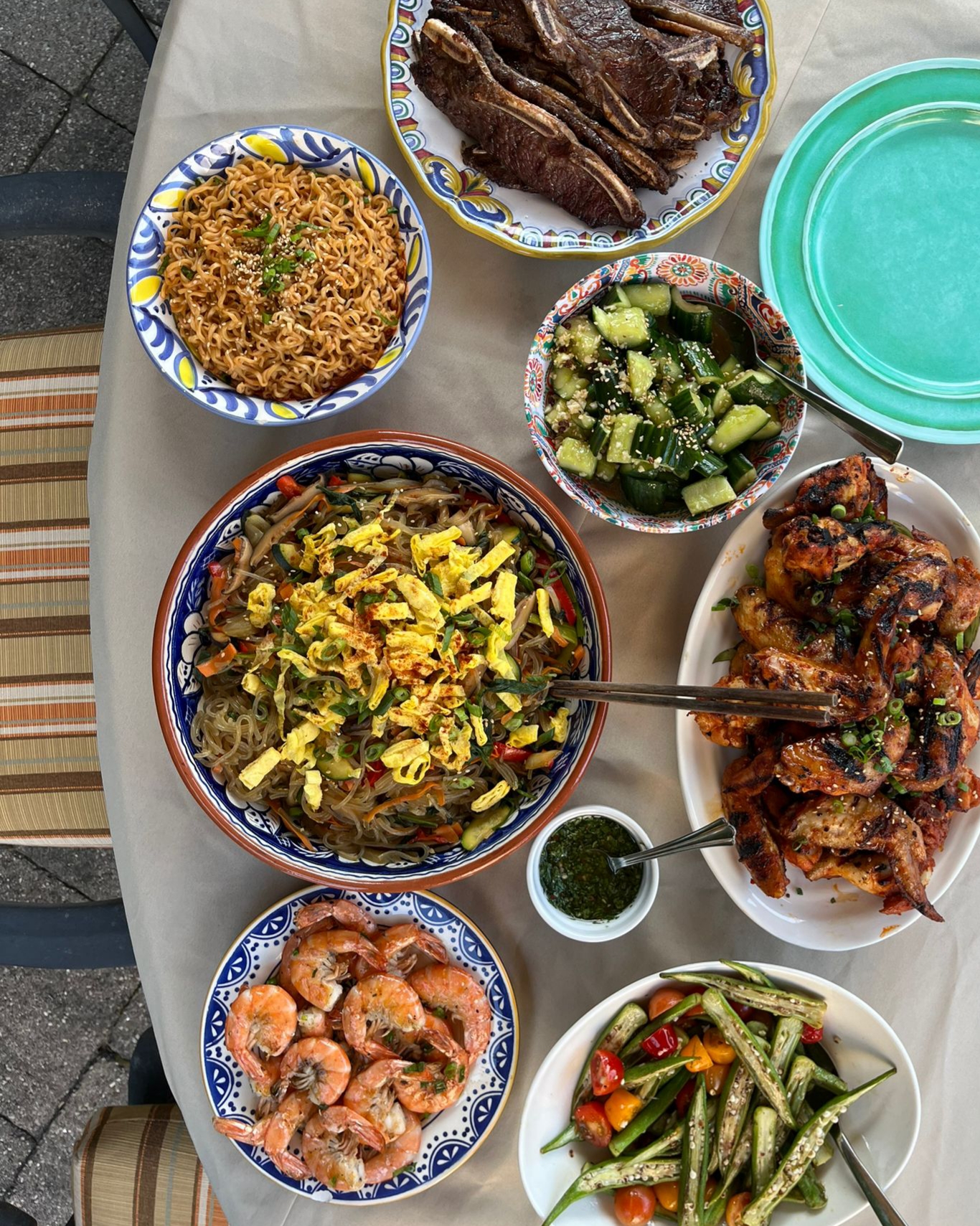
On The Menu: Buldak stir-fried noodles, Grilled kalbi ribs,
Szechuan Spicy Cucumber Salad, Gochujang chicken wings,
Okra and Tomato Salad, Grilled shrimps with cilantro lime sauce and Chap chae.

On the Dessert Side: Easy Creme Caramel with Fresh Fruits
and Coconut Tapioca with Taro, Grass Jelly and Jackfruit


And on the friendship side, Lisa and I, my baby with her baby.... So Blessed 🙏! 


How did you celebrate Asian Heritage Month?


Saturday, January 8, 2022

One Year Ends, Another One Begins... Welcome 2022!

 
Happy New Year Everyone! 

It has been a crazy 2021 (both personally and for my career- but in a good way), much has been accomplished over a continued year of uncertainty, pivoting and reinvention. And a lot has to do with being flexible, having a can-do attitude and above all, a dose of optimism. #entrepreneur #myownboss
 
From being featured on Fête Chinoise, a cultural platform that aims to empower individuals to deepen the connection between identity and Chinese culture, to raising funds for food insecurity in my online Cook For A Cause series, teaching cooking classes virtually with youths, to bringing awareness on Anti-Asian racism issues during its height and celebrating Asian heritage month of May in after school online events, producing healthy demo cooking videos for The Neighbourhood Table (to support food security in Etobicoke coupled with Food Share produce boxes) and for Michael Garron Hospital in conjuction with the Healthy Together program for young families, conducting a Health and Wellness Chinese cooking class over lunch at Nestle Toronto's head office and catering family meals (for 3 full days) for a friend who was sick, it sure has been a year of helping, contributing and supporting in the names of culture, friendship and community. 

Last but not least, certainly THE highlight of my Asian culture contribution of 2021- some people get a covid pet but I got a covid cookbook, started and launched in 6 months- a remarkable feat! I even went on my first ever Instagram Live to promote my book and hot pot 🥘♨️. Here is a gallery to recap the latter part of an Amazing year!

The cherry on top of a fun Kimjang event in November.


Peek A Boo... I see you! Talk about nappa cabbage mountain ⛰- 300 pounds of it for kimchi-making #kimjang #koreantradition

So thrilled to be participating again in this important time-honoured tradition in Korea 🇰🇷- Kimjang of making and sharing kimchi (recognized by UNESCO as an Intangible Cultural Heritage of Humanity in 2013) reminding Korean communities to live in harmony with nature. This celebrative time in Korea is also a symbol of powerful compassion of giving and community- paying it forward with kimchi for the poor and destitute!

It was so Amazing reconnecting and meeting new food-loving friends/chefs at my friend and organizer Susu Han's place (chef, entrepreneur, Korean cooking instructor at GB and food educator) on Day 2 of the kimchi process. The day before was salting and brining. This day, all day vegetable and seasoning prep before marinating the cabbage to ferment for weeks!
 

Cooking with Susu, Susan, Janet, Joanne, Joey, Ngoc and Ema.


It was an honour talking about my new hot pot book #hotpotcookbookforbeginners with @carolharrison.rd on an IG Live @sparkrds- A nutrition communications platform for Dieticians. We covered broths, Chinese Chinkiang black vinegar as a trendy vinegar to have in your pantry and the communal aspect of hot pot cooking. The 20 min. session with the full video is available on IG @sparkrds 🥘♨️


I can't thank my friends and family enough for their incredible support and feedback 📖💞! We were out of stock the first day after launch (November 30th) on Amazon.ca due to preorders but it was back in business in time for the holidays🎁😉! Also available on Chapters-Indigo.


Here are a few review highlights on Amazon.com


Friends, keep those pics coming in including your family hot pot renditions 🥘♨️!


In other projects, here was a look at the first of a new series of cooking demo videos in collaboration with Child/Maternal and Diabetes Departments @michaelgarronhospital.

"Hi there, my name is Susan Ng. I am a Chef, Food Educator, Cooking Instructor and a mom to 3 boys.

I will be sharing with you material and learnings from Healthy Together. Healthy Together is an innovative and unique family education program that brings together families to learn to make healthier choices and build healthier relationships.

Today, we will cover Breakfast and Better-for-you drinks. Breakfast is the most important meal of the day. We will look at some healthy food ideas and tips to start your family's day off right. We will make crunchy fruit and nut granola, yogurt parfait and breakfast burrito. For drinks, we will look at some simple healthy choices you can make that are delicious and reduce buying sugary prepared drinks on the market such as smoothies and real fruit-infused water!"🍌🍓🥝🍎🥚🍳🌯🥥🥛
 

Homemade granola and yogurt parfait

I even starred my 12 and 9 year olds 👨‍🍳👨‍🍳💗 in a Cook With Kids theme to cap off my series of Healthy Together demo cooking videos to help families eat better and to build healthier relationships.

"Today, we will talk about cooking with kids. What are some helpful strategies and tips, look at kitchen tasks by age, and get in the kitchen with my kids to make tacos and banana blueberry muffins.

Cooking together with your family is one of the most important factors to healthy eating. Making the change from cooking for your kids to cooking with your kids can feel like a leap but it's all about taking one small step at a time. Gradually your kids will be more proficient, independent, their confidence will grow and you will reap the rewards of building a stronger family connection and eating more healthily just by cooking together. Of course, it's easier and less messy if you just do it yourself, but if you allow your children to take part in some of the preparations, you will give them a sense of ownership and pride in the final results. And it can be a superb way to motivate fussy eaters to try new tastes and gain confidence with a variety of foods."


Banana Blueberry Muffins

I had the great honour to collaborate with my previous colleague from our time in Kraft Kitchens- the lovely Cayla Runka, RD who leads the Corporate Wellness role and nutrition team at Toronto's Nestle Head Office as Nutrition Director.

To keep their staff healthy and well, they run several wellness months throughout the year to keep things top of mind. For Oct/Nov, they ran a Cultural Food month to support diversity and inclusion at work but also to celebrate multicultural month. I had the opportunity to showcase my heritage through Cantonese Cuisine in a lunch time virtual cooking class with Cantonese Chow Mein 🤗🥘🥢.


Awww 😍 *** Repost by Jennifer Uy @riceflower888🌹***

With a debt of gratitude I’d like to showcase the outstanding meal prep by my friend and cookbook author Chef @susanssavourit to help me on my journey of healing and eating whole healthy. Getting the right nourishment and making sure my family is fed daily has been a source of panic attacks for me since returning from the hospital. I wanted home cooked, freshly prepped, TCM balanced, heart healthy foods not just for me but for our family as a whole.

But I was incredibly tired. My son caught an awful cold. Dishes piled up. Food prep chaos. Clean ups. Lunch box packing. I couldn’t drive for groceries. Take out didn’t have the balanced meals we needed. Etc etc

Susan more than came through and offered to help. She’s given me this week’s food so I can focus on other things including rest. She’s taken a load off my mind and I’m so grateful.

She not only prepared all this but delivered it to my home. Knowing I don’t have access to my car. The following weeks I won’t be as spoiled as she has other engagements but she’s given me some resources I can follow up on.

She gave me the best gift - peace of mind. Thank you so much 💖🙏🏼

Taiwanese braised pork with egg and ginger
Pang Pang Chicken chicken noodle
Korean chap chae
Greek quinoa salad
Poached salmon with lemon and dill
TCM health soup- Pork Cole Soup


As I mentioned in my last post, I will be teaching an online Food Business program to newcomer women in my new role as IRCC 'Willing To Work' Project Coordinator at Newcomer Kitchens. Beginning next week, I am excited to e-meet my group of ladies comprising of 7 from Yemen, Turkey, Iran, Pakistan and China, and work with them over 12 weeks! 


Let the new challenge and new learnings begin... Stay Tuned!